


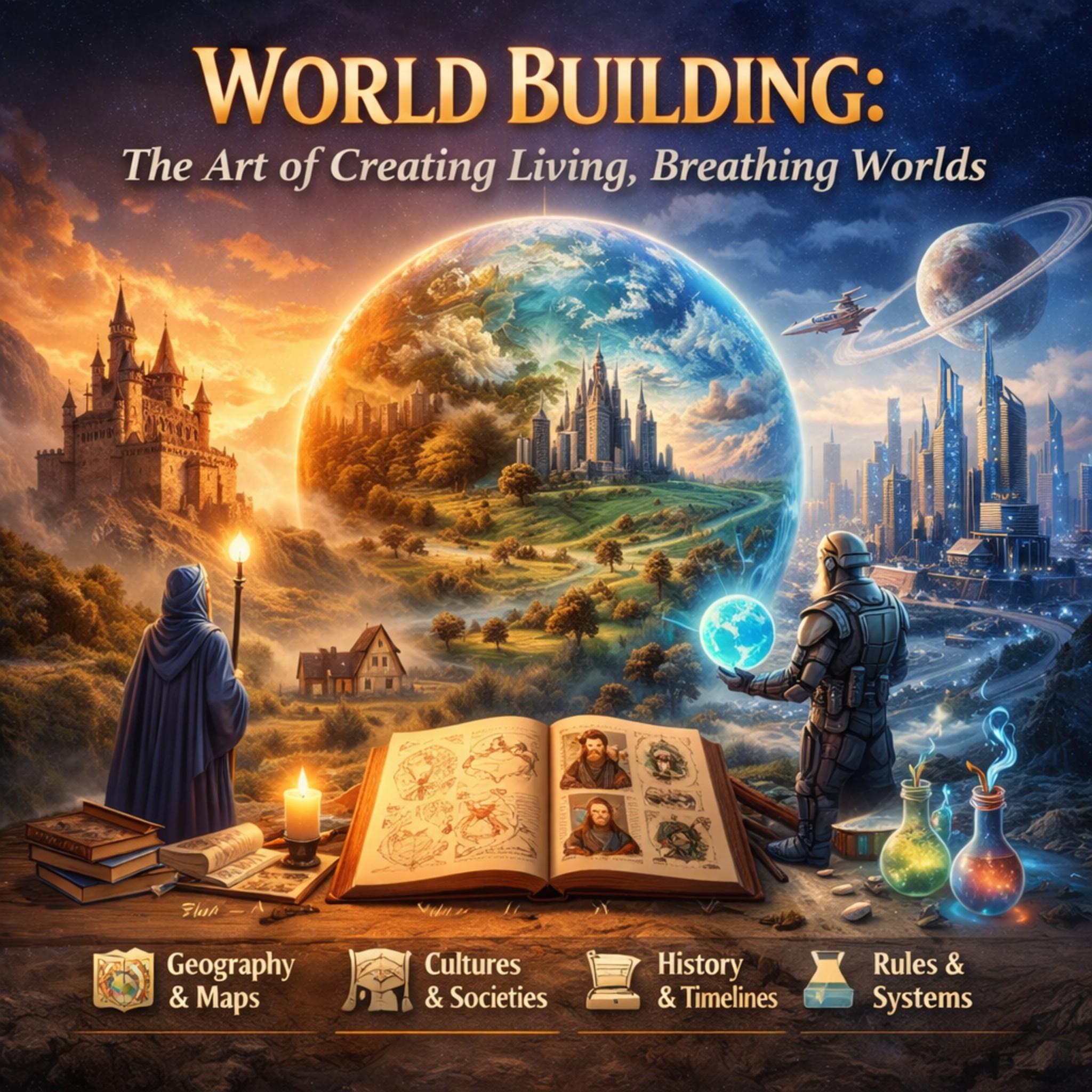
World building is the creative process of designing a fictional universe that feels rich, believable, and alive. It is a vital element in storytelling across novels, films, video games, comics, and role-playing games. A well-built world does more than provide a setting—it shapes the characters, drives the plot, and immerses the audience in a reality that feels consistent and meaningful.
The first step in world building is establishing the setting. This includes geography such as continents, landscapes, cities, and natural resources. Geography influences how societies develop, how people travel, and how conflicts arise. A kingdom surrounded by mountains may be isolated and defensive, while a coastal empire may thrive on trade and exploration. When the physical environment makes sense, the world immediately feels more authentic.
Culture adds depth and humanity to a fictional world. Every society has traditions, customs, clothing styles, food, languages, and belief systems. These cultural elements define how people interact, what they value, and how they view outsiders. Even small details—such as greetings, festivals, or social rules—can make a world feel lived-in and realistic.
History is another essential pillar of world building. Just like the real world, fictional societies are shaped by past events. Wars, revolutions, alliances, discoveries, and disasters leave lasting marks on nations and individuals. A strong historical timeline explains current political tensions, ancient rivalries, and forgotten legends. History also provides endless opportunities for mystery and storytelling, from lost civilizations to hidden truths.
Rules and systems hold the world together. In fantasy, this often means creating a clear magic system with defined limits and consequences. In science fiction, it may involve technology, space travel, or artificial intelligence governed by logical principles. Consistency is critical—once rules are established, they must be followed. Breaking them without explanation can weaken immersion and audience trust.
Politics and power structures add realism and conflict. Who rules the world? How is power gained, maintained, or challenged? Governments, religions, corporations, or secret organizations all influence how the world functions. Political tension creates natural story conflicts and gives characters difficult choices to face.
Characters are the living soul of world building. They are shaped by their environment, culture, and history. A person raised in a war-torn land will think differently from someone raised in peace and luxury. At the same time, characters influence the world through their actions, causing change and growth within the setting.
Conflict arises naturally from strong world building. Scarcity of resources, cultural differences, technological progress, or ideological clashes all create believable struggles. These conflicts feel organic because they emerge logically from how the world is designed.
Modern creators often rely on digital world building tools to organize maps, timelines, characters, and lore. These platforms help maintain consistency and make collaboration easier, especially for large projects.
Ultimately, world building is about creating a place that audiences want to explore. When done well, the world becomes unforgettable—continuing to live in the imagination long after the story has ended.

 English
 Arabic
 French
 Spanish
 Portuguese
 Deutsch
 Turkish
 Italiano
 Russian
 Romaian
 Portuguese (Brazil)
 Tiếng Việt