


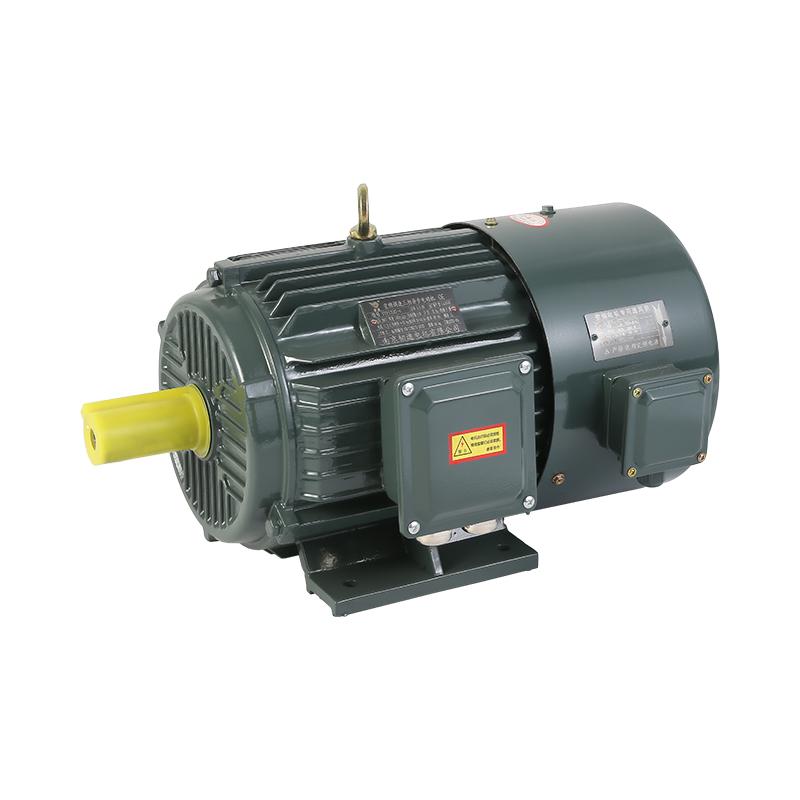
Historically, the classic asynchronous motor was valued for its fixed-speed operation. However, its true potential is unlocked through modern power electronics. The advent of the variable frequency drive (VFD) has transformed this motor into a highly controllable and efficient component. A VFD adjusts both the frequency and voltage of the power supplied to the asynchronous motor, allowing for precise and smooth speed regulation over a wide range. This solves the traditional limitation of inflexible speed.
This controllability translates directly into substantial energy savings, particularly in applications like pumps, fans, and compressors, where mechanical output often needs to vary. Instead of using dampers or throttling valves to restrict flow—a wasteful process—the speed of the asynchronous motor driving the system can be reduced to match demand exactly. This approach can dramatically lower electrical consumption. Furthermore, controlled acceleration and torque limits reduce mechanical stress on both the motor and the driven equipment, extending their service life.
Today, the asynchronous motor is increasingly part of smart, interconnected systems. Sensors can monitor its temperature, vibration, and current draw, feeding data to controllers for predictive maintenance and process optimization. When paired with advanced drives, the asynchronous motor offers dynamic performance that meets the needs of complex automation, robotics, and precision machinery. This fusion of a century-old, robust electromechanical design with cutting-edge digital control solidifies the asynchronous motor’s continued relevance as a versatile and intelligent workhorse in the industrial landscape.

 English
 Arabic
 French
 Spanish
 Portuguese
 Deutsch
 Turkish
 Italiano
 Russian
 Romaian
 Portuguese (Brazil)
 Tiếng Việt