


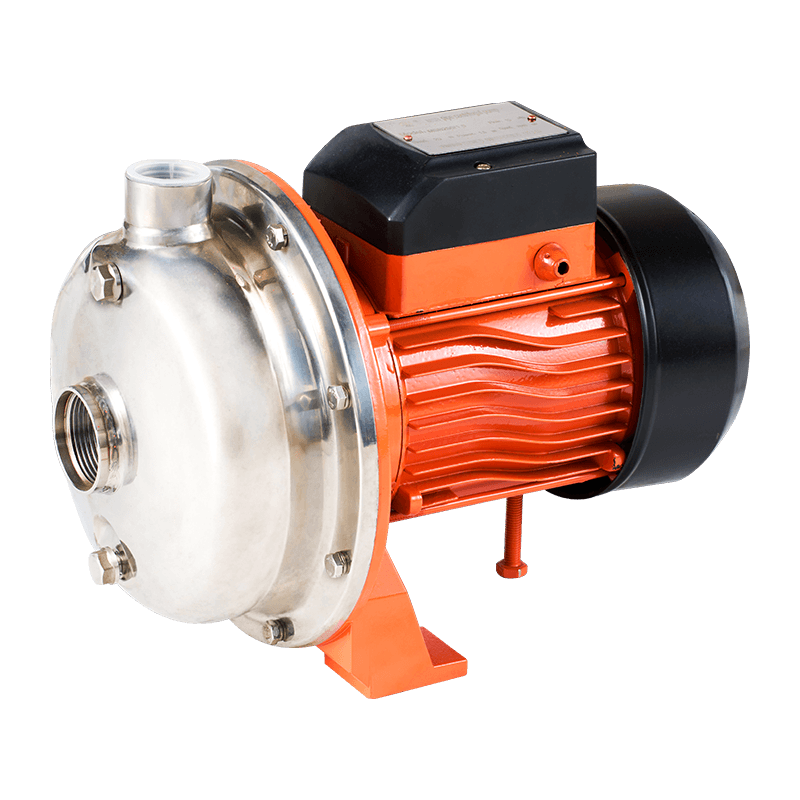
A multistage centrifugal pump is deployed in systems where the required pressure exceeds the practical capability of a single-stage centrifugal pump. Its most recognizable application is in boiler feed systems for power plants and industrial steam generators, where it must supply feedwater at pressures often exceeding hundreds of bars. In water supply networks, these pumps are used for pressure boosting in tall buildings, for supplying water from deep wells, and in main-line transfer stations to overcome friction losses over long distances.
Beyond water, these pumps handle other clean or mildly abrasive fluids in process industries. They are central to reverse osmosis (RO) desalination plants, providing the high pressure needed to force seawater through semi-permeable membranes. In the oil and gas sector, they are used for water injection into reservoirs to maintain pressure. Their ability to deliver a smooth, pulse-free flow at high pressure also makes them suitable for high-pressure cleaning systems and certain hydraulic applications.
System design must account for the pump's characteristics. A careful analysis of the system curve is necessary to ensure the pump operates near its best efficiency point (BEP). Considerations like NPSH availability, fluid temperature, and potential for cavitation are vital for reliable operation. The wide-ranging utility of the multistage centrifugal pump is a testament to its effective design principle. By staging multiple impellers, it efficiently meets the demanding pressure requirements of critical industrial, commercial, and municipal systems, forming a reliable backbone for fluid transfer where significant head is non-negotiable.

 English
 Arabic
 French
 Spanish
 Portuguese
 Deutsch
 Turkish
 Dutch
Dutch
 Italiano
 Russian
 Romaian
 Tiếng Việt