


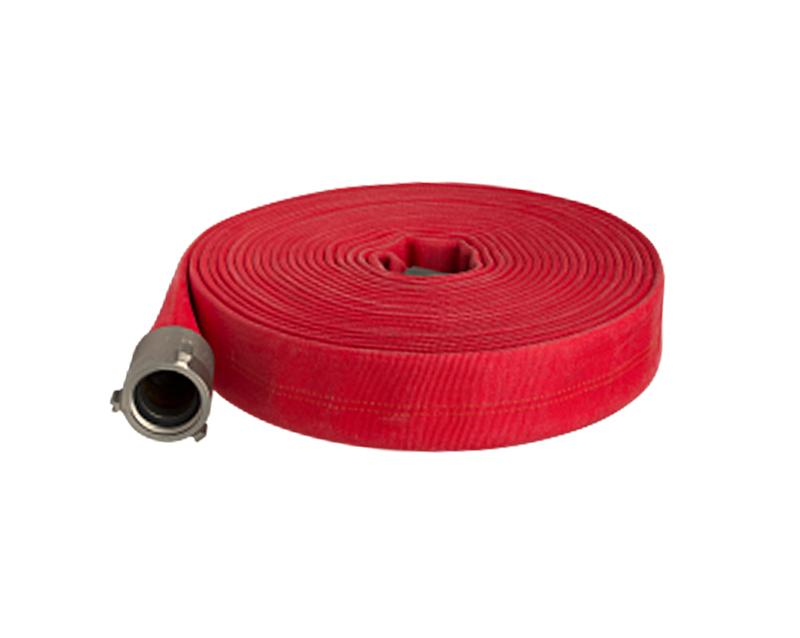
At first glance, a fire hose appears simple—a flexible tube for moving water. But this perception belies a sophisticated piece of engineering, meticulously crafted to perform under dreadful conditions. Its construction is a layered defense against pressure, abrasion, and heat. Modern hoses are composites of synthetic fibers, rubber linings, and durable outer jackets, each layer serving a distinct role in managing the pressurized stream.
The journey of the fire hose from water source to blaze is a feat of logistics. It is laid out in sections, coupled with brass fittings that click together with satisfying certainty. Each length is a segment of a growing pipeline stretching toward danger. The pump panel operator is the conductor of this fluid orchestra, modulating pressure to ensure an effective stream reaches the nozzle without bursting the line or making it unmanageable. This system turns a static water supply into a mobile, powerful weapon.
Maintenance of the fire hose is a ritual of readiness. After each use, it must be drained, cleaned, dried, and inspected. Any weak spot, any lingering debris, could cause failure at a critical moment. This care ensures the hose remains supple and strong, ready to be packed again into its compartment. The fire hose is therefore not a static tool but a dynamic one, cycling between moments of explosive action and periods of meticulous preparation. Its reliability is not accidental but the result of design and respect, a coiled testament to preparedness that allows firefighters to confidently engage their adversary, backed by a trustworthy stream.

 English
 Arabic
 French
 Spanish
 Portuguese
 Deutsch
 Turkish
 Dutch
Dutch
 Italiano
 Russian
 Romaian
 Portuguese (Brazil)