


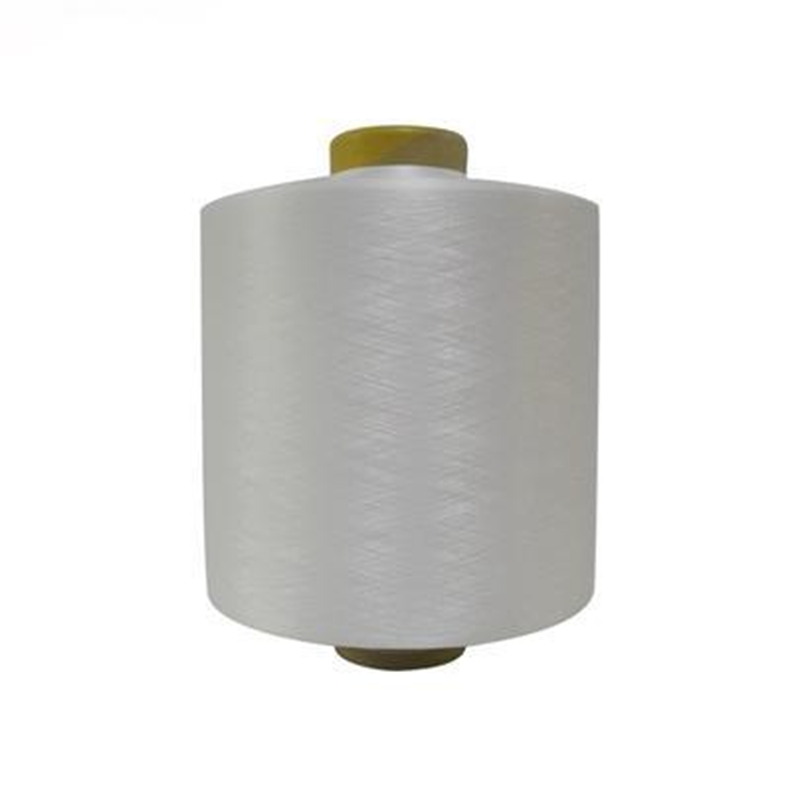
Air Covering Yarns represent a specialized category of textile yarns engineered to achieve a high volume-to-weight ratio, resulting in fabrics that are lightweight, soft, and possess notable bulk without corresponding heaviness. This effect is primarily created through a unique spinning or covering process that introduces and traps air within the yarn's structure. Unlike compact, dense yarns, Air Covering Yarns are designed to provide warmth, loft, and a cushiony hand feel while minimizing the actual fiber content, making them valuable for applications where comfort, insulation, and reduced material cost are priorities.
The production of these yarns often involves a hollow spindle covering technique. A core thread, which may be an elastic filament like spandex or a fine, strong thread, is fed through the center of a hollow spindle. At the same time, one or more staple fiber rovings are drafted and wrapped around this core by the spindle's rotation. The key is that the wrapping is done with low tension and in a way that does not fully compact the fibers, creating a sheath of loosely bundled fibers with considerable air pockets. Alternatively, some Air Covering Yarns are produced through modified ring spinning or air-jet texturing processes that create looped or bulked structures capable of entrapping air.
The resulting yarns are particularly favored in knitwear for sweaters, scarves, and socks, where they provide warmth without bulk. They are also used in home textiles like blankets and upholstery fabrics to create a plush surface. When working with Air Covering Yarns, knitters and weavers often use larger needle or reed settings to preserve the yarn's airy character. The innovative structure of Air Covering Yarns demonstrates how textile engineering can manipulate material form to achieve specific tactile and functional properties, offering a modern solution for creating comfortable, lightweight, and resource-efficient fabrics.

 English
 Arabic
 French
 Spanish
 Portuguese
 Deutsch
 Turkish
 Dutch
Dutch
 Italiano
 Russian
 Romaian
 Portuguese (Brazil)